Tuesday, July 10, 2018

THE GODDESS'S DESCENDANTS

 
THE NEWLY RICH OF THE INDUSTRIAL REVOLUTION COPY THE NOBLES' CODE
 
Politically and economically victorious but socially insecure, they model their culture on that of the prestigious vanquished. That art gives...

  • Gravitas to monuments.

Place de la Nation, Paris, 1880

 Place de la République
 Hommage à la République, Paris, 1883

 New York Bay, Statue of Liberty web site
Statue of Liberty, New York, 1889

  • Dignity and elegance to daily life.

At the "Alma Marceau" 
bus stop in the upscale 8th.

# # #

Many of these figures adorn buildings in the former working-class neighborhoods, torn down after the insurrections of 1848...

 The insurrection of February 1848. That of June 1848 was much more terrifying.

Corner of rue Saint-Denis and rue de Turbigo, 2nd


Or that burned down at the end of La Commune:

  • The nude at the summit of the rebuilt Law Court, set ablaze on May 24, 1871.


Zoom


  • The Gobelins manufactory  

 Fires during the Commune, lithograph, 1871 / zoom


  • Across the street


The majestic or gracious figures
help explain why the city's insurrectionary past 
is so hard to imagine.  

End of this section.

*    *    *

Next section,


Saturday, December 30, 2017

2.7. WHAT OPÉRA TOURS WON'T SAY: OBSERVATION AND THE USUAL STORY CLASH

MENU: 2.7. What Opéra tours won't say

"LOOK AT THE IMPORTANCE WE GIVE TO CULTURE!" IS THE OFFICIAL VIEW OF THE MID-19TH CENTURY'S MOST IMPORTANT BUILDING
(1861-1874)

Often one needs specialized information to challenge accepted views. Here observing is enough.

     Christopher Dickey
Richard Nahem
The Palais Garnier, named after its architect Charles Garnier or called simply "l'Opéra," towers over a new 19th-century city.


Friday, December 29, 2017

II.7.1. A PALACE FOR A NEW ELITE

2.7.1. MENU: A palace for a new elite

THE OPÉRA DOMINATES A NEW CITY OF BANKS, INSURANCE COMPANIES, DEPARTMENT STORES...

The second tranche of the urban metamorphosis that followed the working-class insurrection avoided rebels and pollution by being built in the wealthy west.

View from the terrace of the Printemps department store

In brief


*     *     *

Next,


Thursday, November 30, 2017

A DESIGN THAT HIGHLIGHTS POWER


THE IMPERIOUS AVENUE DE L'OPÉRA HIGHLIGHTS THE MONUMENT, AS STRAIGHT LINES HIGHLIGHTED SYMBOLS OF MONARCHY 
 
Neige à l'avenue de l'Opéra by Camille Pissaro, 1898 / zoom
The Avenue de Paris leads the eye to the chateau de Versailles.

It was designed to connect the Opéra with the Tuileries palace and where official parades took place until World War I: 

  Web photo, no photographer named

The Tuileries burned and that tie has been forgotten.


Place de l'Opéra too adapts the monarchs' template: It is a public space toward which straight streets converge, homogeneous architecture surrounds it and the edifice itself replaces the statue of the king.

Claude Abron

The edifice is associated to Napoleon III
as Versailles is to Louis XIV.

Pamela Spurdon


*     *     *


Wednesday, November 29, 2017

WHERE NEW AND OLD MONEY CROSS PATHS


EXCEPTIONALLY EXPENSIVE BECAUSE IT UNITED ALL THE ARTS, OPERA PROVIDED A PRETEXT FOR ELITES TO MEET ON NEUTRAL GROUND
 
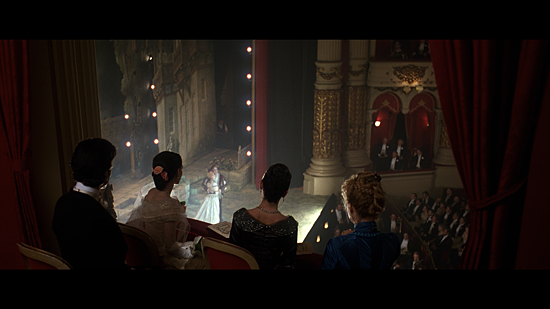
Age of Innocence by Martin Scorsese, 1995 
A long sequence at the opera begins the story set in New York's high society of 1870.

The Industrial Revolution's "nouveaux riches" wished to mix with the nobility...

  • But its salons were closed to them: "He's a banker who shows off his fortune... he's tried to come to see me..."
 -- A marquise observing the banker's wife from her loge:
 Balzac, Lost Illusions, 1843
  • Yet impoverished nobles might welcome such encounters as steps toward useful marriages. 

The new Opéra was designed to facilitate the mix:

  • The sculptures that flank the entrance of the performance space fade into a setting where costume is enhanced: 


        The Staircase at the Opéra by Louis Béroud, 1877 / zoom 

  • The staircase divides to lead toward balconies, from which to observe the arrival of allies and rivals, exchange glances and be seen oneself:


Ball at the Opéra by Henry Gervex


  • Loges and promenading space favor socializing during the two hour-long intermissions:

"The loge of the First Gentlemen [...]; one sees and is seen from all sides."   
-- Lost Illusions
    • In Paris, young men of fashion gossip wittily with a marquise. Her provincial guests are hopelessly outclassed. (Lost Illusions)
    • In Moscow, the unsavory Kuragin begins seducing Natasha, the young heroine, in a loge. (War and Peace)
    • In Saint Petersburg, outcast Anna Karenina defies society by coming magnificently dressed and sitting in the front row. (Anna Karenina)

Anna Karenina by Clarence Brown with Greta Garbo, 1935

# # #

The promenading space is the Grand Foyer, where "light and color create a world without doubt or anxiety, a lost Arcadia."
--  Introduction, Les Peintures de l'Opéra de Paris by J. Foucart and L-A Prat, 1980


Opéra web site

It comfortably holds the public of 2000, 
for whom meeting was often the real reason 
for coming to the show. 

*     *     * 

Next,


Saturday, November 25, 2017

"WE TOO CAN MINGLE WITH THE GODS"


ECONOMICALLY VICTORIOUS BUT SOCIALLY INSECURE, THE

The Opéra decor is the last flowering of an art that linked nobles with the gods:


Grand Staircase ceiling by Isodore Pils, 1865

The theater has two ceilings, the modern placed over the original:


  • The original made the public feel itself among the gods on Mount Olympus (in 1874).
By Jules Lenepveu

  • That we see now alludes to various operas, and has no tie with the rest of the decor (since 1964):

By Chagall, 1964

The Opéra's inauguration and the first Impressionist exhibit
take place in the same year (1874-5). Reactions then: 

  • The Opéra decor is the highest expression of French art. 
  • Impressionism is "unfinished" scribbling.
  • Idealizing every-day people is "Communard."*

*Giving Renoir an official commission would threaten the young republic, says the President (Gambetta, in 1877).
-- My Father by Jean Renoir, 1962
  
   Dance at the Moulin de la Galette by Auguste Renoir, 1876 / zoom

A generation later the middle class knows its victory definitive, and adopts a code of its own.

Deities and heroes of antiquity vanish, and young, handsome, happy, ordinary people idealize a different humanity and announce our ads.

 So ends the respectable part of our visit. 


End of this section.

*      *      * 

Next section,
II.7.2.
Backers, sex and money